
Martin Criminal History Checks
Find the incident coordinates or exact street, identify the arresting agency, and read the county on the citation, warrant, booking, or docket. Do not choose Stephens County only because most of Martin's population lies there. The correct custodian follows jurisdiction and agency.
- Confirm the precise Martin event location and county.
- Identify the responding or arresting agency from the report, citation, or dispatch record.
- Request the report from that agency and booking from that county's jail.
- Use the matching county's Magistrate, State, or Superior Court for filed matters.
- Add Georgia Felon Search only for its limited statewide felony-conviction slice.
Martin Records Cross a County Line
Official 2024 estimates place 346 Martin residents in Stephens County and 2 in Franklin County, but population share does not settle a specific case. A road, parcel, or traffic stop can put the event on the other side. Use the event itself, not the mailing city, to choose the records system.
The Census county profile supplies official population context for the Stephens side.
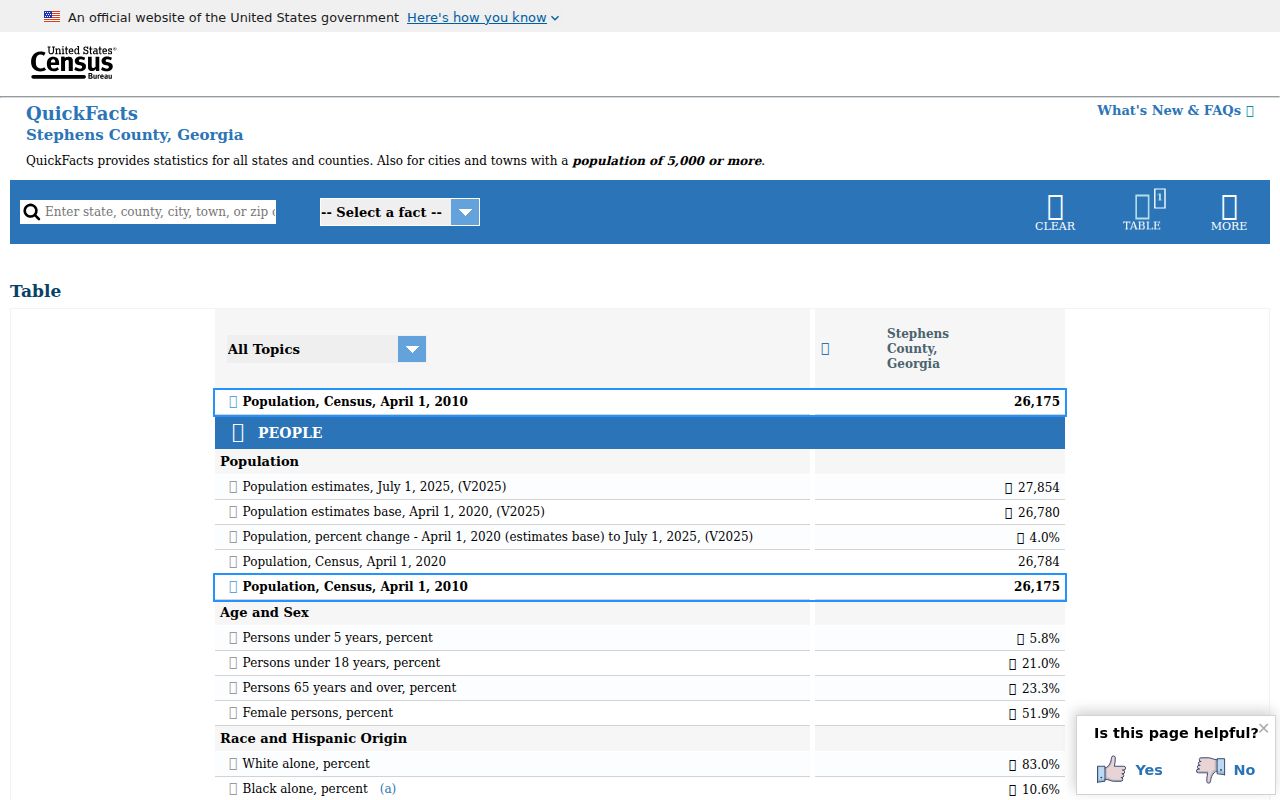
The population view explains local scale, while jurisdiction still depends on the event location.
A property description, road intersection, or coordinates can settle the county when a postal address cannot. Keep a copy of that jurisdiction check with the search notes. It explains why a Stephens clerk may have no record even though the city name is correct, and why a Franklin result should not be merged into a Stephens-side Martin history.
Records at the Martin Police Department
No official Martin online police-record request or municipal criminal case-search interface was located. Call Martin city hall to identify the responding agency, then send the request to that agency. This is more accurate than assuming Martin maintains a stand-alone police archive.
Ask city staff which agency responded, not whether a person has a criminal history. Supply date, time, location, and incident type. The answer may route the request to Stephens Sheriff, a Franklin County agency, Georgia State Patrol, or another office.
Martin City Names Can Create False Leads
Searching only “Martin” may combine two county systems or return a person whose address is unrelated to the event. Confirm county, arresting agency, case number, and court before matching records. These identifiers carry more weight than a shared place name.
If the citation says Stephens, use Stephens offices. If it says Franklin, stop and switch counties. Keeping notes from each system apart prevents a Franklin result from being presented as a Stephens record.
People with similar names create another risk. Compare date of birth, case number, arresting agency, and event date before treating two entries as one cycle. A statewide felony result may not display enough local detail to solve the match. The certified disposition and originating report remain better sources for a specific Martin event.
Booking and Arrest Records in Martin
For a Stephens-side Martin arrest, call Stephens Sheriff at 706-886-2525 for recent booking. A Franklin-side arrest uses Franklin County custody channels. Do not merge booking entries just because both list Martin as a city.
A booking charge is the intake allegation. It can differ from the charge later filed by a solicitor or district attorney. Follow the county and case number into the proper court to learn disposition.
Martin Warrants on the Stephens Side
Stephens Magistrate Court is the local route for many arrest and search warrants, first appearances, and bail matters on the Stephens side. Call 706-886-6205. Georgia has no single statewide public warrant lookup, so the local sheriff and issuing court remain essential.
A warrant event is not a final disposition. If charges were later filed, use State Court for misdemeanors or Superior Court for felonies. A certified disposition from the filing court is stronger proof of the outcome than the warrant entry.
The sheriff serves warrants, but the issuing court controls its judicial record. Ask whether the inquiry concerns an active warrant, a warrant return, first appearance, or later case. Those are different points in the sequence. There is no official statewide name screen that replaces confirmation with the Stephens sheriff and Magistrate Court.
The Martin Municipal Court File
No official Martin municipal criminal docket interface was found in the research. Begin with city hall to learn whether a city file exists and which tribunal handled it. When a matter belongs to a county court, contact that county's clerk instead.
| Court identity | Confirm through Martin city hall and the county named on the case. |
|---|---|
| City matters | Verify whether the citation or ordinance matter remained municipal. |
| County matters | Use Stephens or Franklin County based on jurisdiction. |
| Lookup channel | Correct clerk counter, phone, or participating court provider. |
| Copies and fees | No Martin-specific schedule was located; ask the record custodian. |
Georgia Felon Search Supplements Martin Records
Georgia Felon Search crosses county boundaries, which can help after the correct local route is checked. Yet it is narrow: the official product charges $15 per completed search and covers qualifying in-state felony convictions, pleas, and sentences. It omits many arrests, misdemeanors, and local docket details.
Use date of birth, race, and sex with the full name to reduce false matches. A result does not identify every Martin event. Compare it with the certified county disposition before connecting it to a particular local case.
Georgia E-Access is also statewide in its routing, but it sends users to participating court providers and requires an account. Select the actual county court rather than searching Martin as if it were one unified docket. Older or non-digitized files may still require a clerk counter request, and provider results may show metadata without a downloadable document.
How Martin Records Reach the County
On the Stephens side, a warrant or first appearance can begin in Magistrate Court, a misdemeanor moves to State Court, and a felony moves to Superior Court. Franklin-side records follow Franklin County's separate offices and circuit.
Record flow: Responding agency › correct county booking and courts › GBI Georgia Crime Information Center
County choice controls the local file. Georgia Felon Search can cross the line statewide, but its $15 name search shows only qualifying felony conviction information and cannot isolate a complete Martin history.
Martin Federal Cases Use a Different Court
Federal criminal cases do not appear in either county's Superior Court. Stephens County lies in the Northern District of Georgia, and PACER is the official federal docket system. Use it only when the matter is federal; a local Martin arrest does not become federal merely because a federal search returns the same name.
The PACER service explains federal registration, search, and current fee policy.
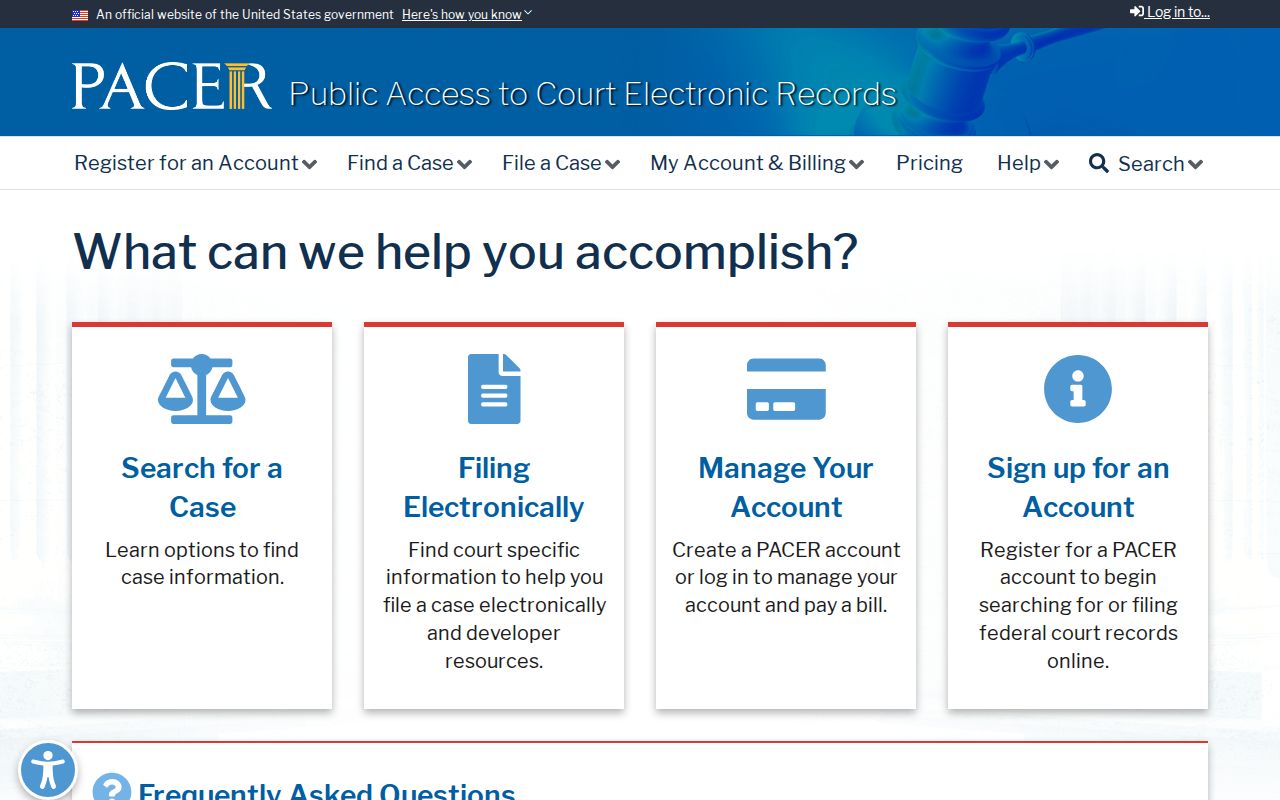
This separate court layer should remain distinct from Stephens and Franklin local dockets.
Martin Parole Records Follow the State
After a state prison sentence, parole decisions belong to the Georgia State Board of Pardons and Paroles, and community supervision belongs to DCS. Neither is a Martin city record or county booking log. Use the judgment to identify whether this post-sentence layer applies.
The Georgia parole authority provides the official decision and resource route.
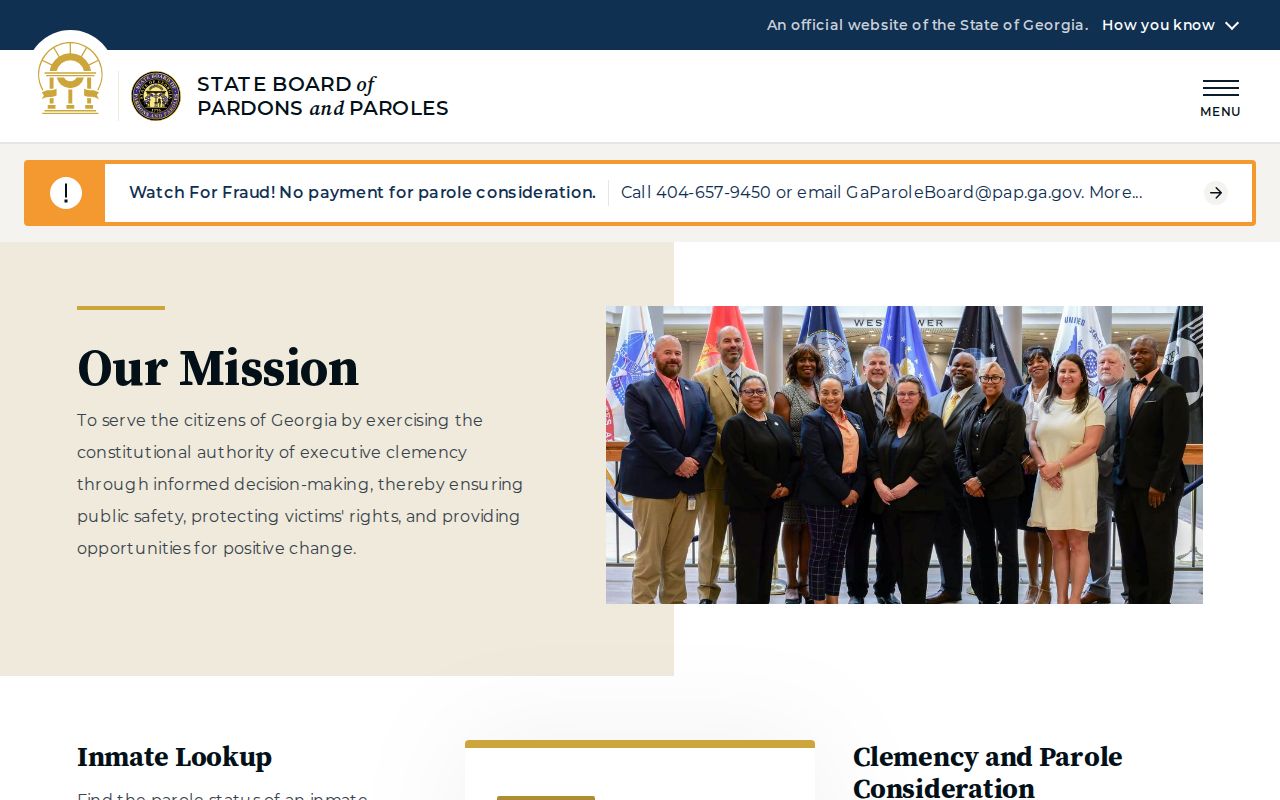
The state image marks a later stage that should not be blended into the original Martin arrest file.
GDC Offender Search serves sentenced state custody, while the sheriff serves county booking. Federal custody uses BOP. These searches answer different questions, and none establishes every arrest in Martin. Start with the judgment or booking source and move outward only when the custody type supports it.
Martin Open Records on the Correct Side
When no routine counter route works, send an open-records request to the agency that created the file. A Stephens-side sheriff record can go to the sheriff or through the county's documented open-records process when staff direct it there. A Franklin-side report must go to the corresponding Franklin custodian. One request should not ask Stephens officials to search another county's records.
Describe the record by event date, location, agency, report or case number, and record type. Ask for a police report, booking document, warrant return, or docket rather than a vague “Martin history.” Narrow terms reduce search time and make it easier for the custodian to explain a redaction or no-record response. Exact local copy fees were not found, so request an estimate before a large production.
If the response identifies another custodian, preserve that routing note. It is useful evidence that the absence came from jurisdiction, not necessarily from the absence of an event. Then readdress the request without combining results from the two county systems. This method respects Martin's unusual boundary while producing a cleaner and more defensible record trail.
Martin Record Access Rules
Georgia's open-records rules apply to the government office that keeps the record. A request must still reach the correct city, county, court, or law enforcement custodian. Protected investigative, victim, juvenile, and personal data may be redacted.
Key Statutes:
O.C.G.A. § 50-18-70 states the public-access policy.
O.C.G.A. § 50-18-71 governs response timing, inspection, copies, and costs.
O.C.G.A. § 50-18-72 identifies exemptions.
A Martin request should state both city and county in its subject line. Include the agency, event date, address, and known number. If an office says it has no record, confirm that the denial is based on custody rather than a spelling issue. Then move to the other county only when the location facts support that step.